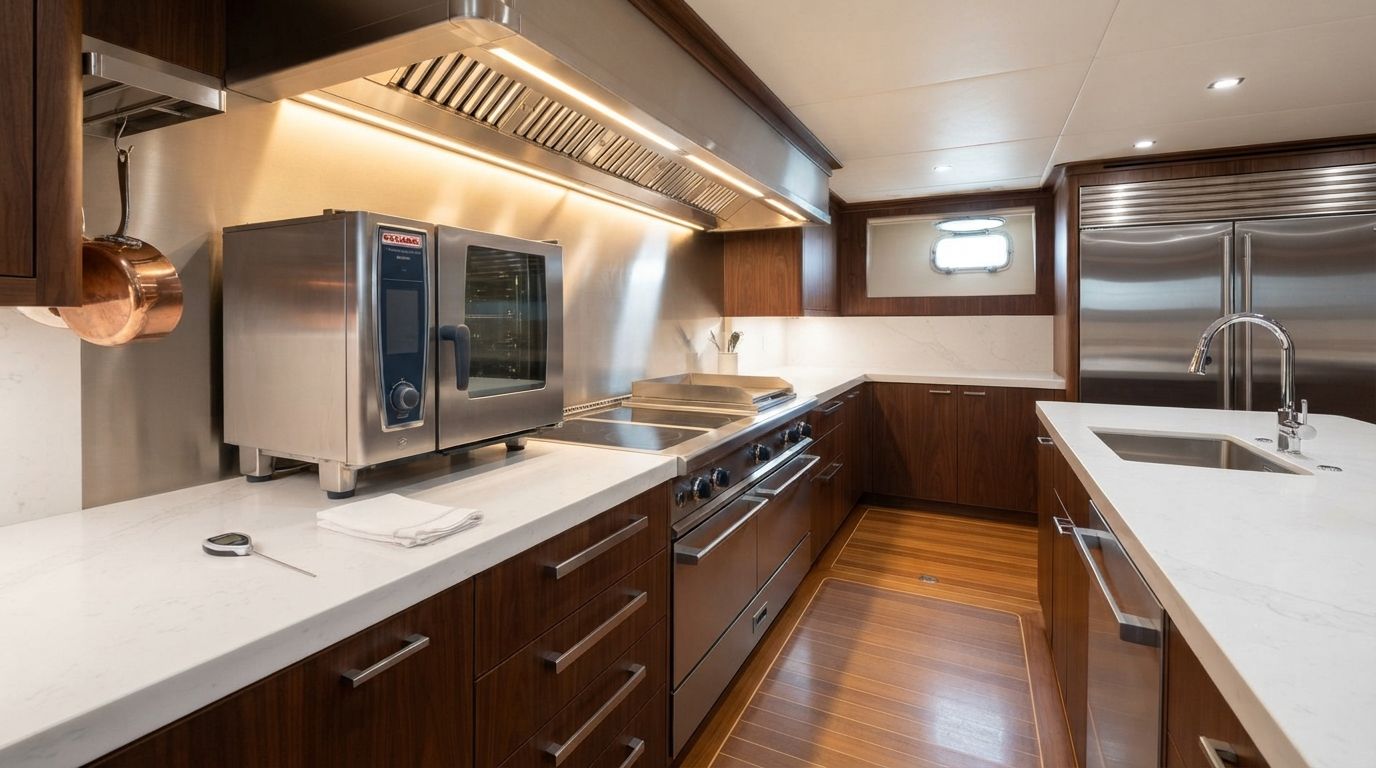
Induction vs Gas in a Marine Galley: The Case for Going Electric
Open flame and LPG storage present real risks on yachts. The case for marine induction cooking — safety, performance, and the brands that deliver it.
Read guide →
← All Resources / Galley Systems
A galley refit is one of the more complex scopes of work a superyacht can undergo during a maintenance period. It involves structural modifications, electrical and plumbing works, fabrication, major equipment procurement with long lead times, and a final commissioning phase that requires everything to come together correctly on a tight schedule.
The vessels that go through this process most smoothly are the ones where the owner, captain, and project manager came in with a clear understanding of what each phase involves, what decisions need to be made at each stage, and where the programme is most vulnerable to delay. This guide lays out that process in detail.
The survey visit is not just a measurement exercise. An experienced marine galley contractor uses the survey to assess the full technical envelope: electrical supply capacity and where it originates, the ventilation extract route and any obstructions, the status of existing penetrations and drainage, the structural condition of the deck beneath the equipment, and the accessibility constraints that will affect installation sequence.
A meaningful survey output is a written scope document that defines what is included, what is excluded, what preparatory works are the shipyard's responsibility, and what the major unknowns are (typically: the condition of hidden infrastructure behind cladding that cannot be inspected without opening). The scope document is the foundation of the project and any subsequent commercial negotiation should reference it explicitly.
Typical duration: 1–3 days on board for an experienced crew. Allow 5–7 working days after the visit for the written scope and preliminary budget range to be prepared.
This is the phase that most often takes longer than anticipated — and the consequences of rushing it are felt months later when the equipment arrives and something does not fit or does not integrate with the vessel's infrastructure. The specification process involves confirming every dimension, every electrical load, every connection requirement, and every interface with other vessel systems.
Equipment selection should be driven by the chef's operational requirements, the vessel's power budget, and the available space, in that order. The commercial galley equipment market offers excellent options across all of these constraints. The mistake to avoid is selecting equipment from a catalogue without accounting for the marine operating environment: vibration, salt air, motion, and the absence of a convenient local engineer when something goes wrong at sea.
For equipment with lead times longer than 8 weeks — custom-sized refrigeration units, specialised induction suites, certified combination ovens — purchase orders should be placed before the fabrication phase begins. Nothing damages a refit programme more reliably than an eight-week equipment lead time that was not identified until month three.
Typical duration: 2–4 weeks for a full galley scope. This is the right place to spend time.
Custom 316L stainless fabrication — counters, sinks, ventilation hoods, shelving, and utility cabinets — is typically the longest-lead element of the contractor's own work. A well-run marine fabrication shop can produce a full galley package in 3–5 weeks from signed-off drawings. The drawings must be finalised and approved before fabrication begins; changes mid-production are expensive and time-consuming.
Drawing approval is a common delay point. The owner's representative, the captain, the interior designer, and sometimes the shipyard all have legitimate interests in the galley design. Establishing a clear approval chain before drawings are issued — and a realistic response time commitment from each approver — protects the fabrication timeline.
Equipment procurement running in parallel with fabrication is the correct approach. All standard-catalogue items should arrive at the shipyard before installation begins. Custom items should have written delivery commitments before the fabrication start date is confirmed.
The installation phase is the most visible and the most stressful part of the project. It is also the phase where the quality of preparation in phases 1–3 becomes immediately apparent. A well-prepared installation proceeds in a logical sequence: demolition and strip-out, preparatory structural and infrastructure works (electrical, plumbing, ventilation), delivery and positioning of major equipment, fabrication installation, appliance connection and commissioning.
Typical installation durations by vessel scale: 30–50 m partial galley refit: 2–3 weeks. Full galley replacement: 4–6 weeks. 50–70 m full galley and laundry scope: 6–10 weeks. These figures assume continuous working, a prepared vessel (electrical and plumbing in the correct location), and no major surprises in the existing infrastructure.
The most common installation delay is discovering infrastructure that does not match the survey records. Wiring that was recorded as a certain specification turns out to be smaller gauge. Drain pipework that was shown as clear is partially blocked. A ventilation route that was calculated as available is obstructed by a structural element that was not visible during survey. Building a realistic contingency budget (10–15% of the installation contract value) into the project is the professional way to manage these discoveries without programme impact.
Commissioning is the phase that separates a completed installation from a working galley. It involves testing every piece of equipment through its operational sequences, verifying that electrical protections operate correctly, flushing and testing all plumbing connections, calibrating and programming cooking equipment, and conducting a witnessed acceptance trial that the captain or chief officer signs off.
Fire suppression system integration is a commissioning requirement that must be coordinated with the vessel's fire system contractor. The galley ventilation interlock — the system that closes the ventilation dampers and activates the suppression agent when a fire is detected — must be tested and witnessed before the vessel leaves the yard.
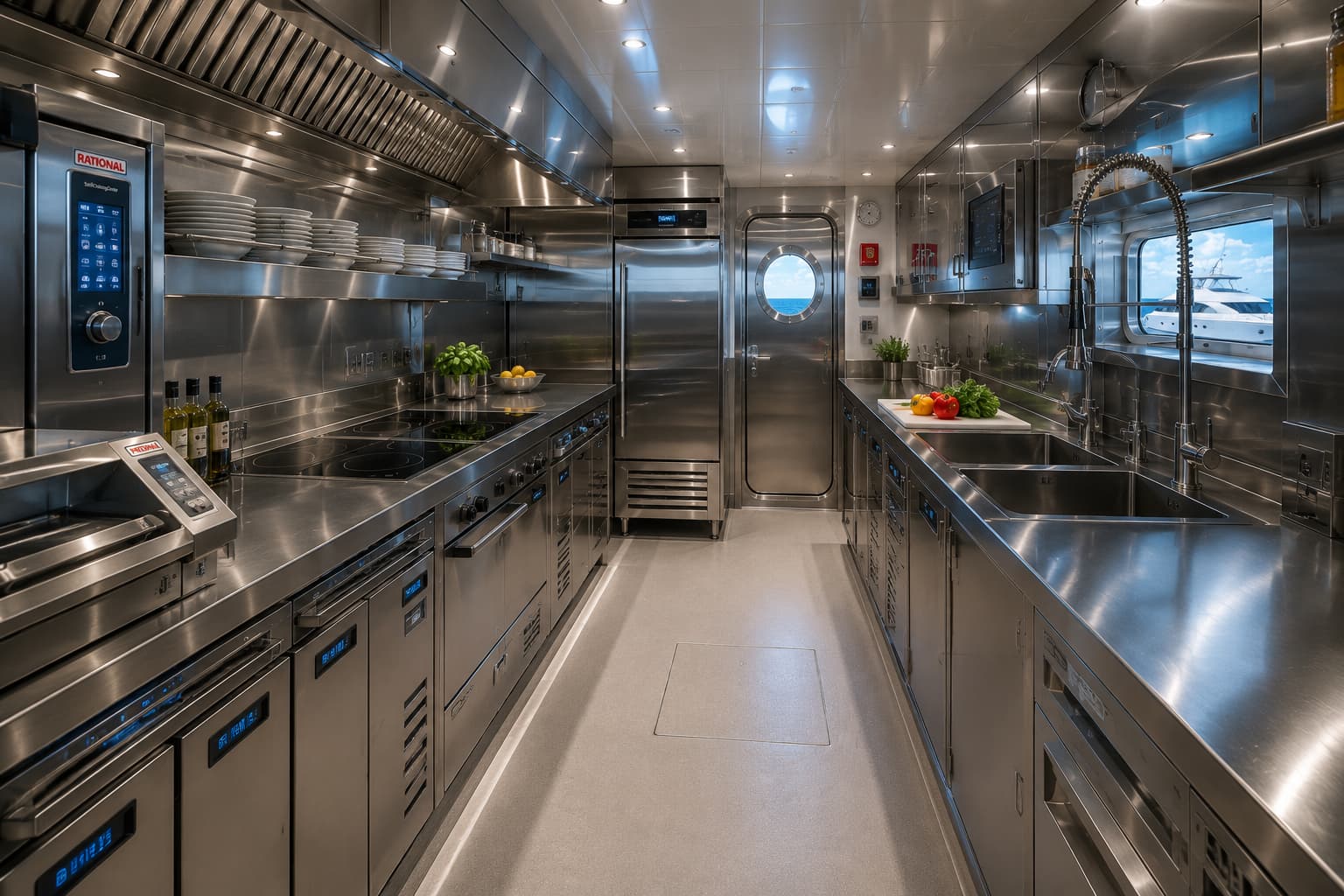
A good commissioning process includes a training session for the crew who will operate the equipment. Combination ovens, in particular, repay the investment of a proper briefing. The Rational and MKN ovens we commonly install have extensive programmable functionality that is rarely used by crews who have not been shown it. A half-day training session with the chef and chief steward is time well spent.
Typical duration: 3–7 days depending on scope. Allow for a final walkthrough and snag resolution period of 2–3 additional days after the acceptance trial.
The five most common sources of programme overrun on galley refits, in descending order of frequency: (1) Equipment procurement surprises — a model is discontinued, a long-lead time was underestimated, or a delivery is delayed. Mitigate by placing orders early and having an agreed specification equivalent for critical items. (2) Drawing approval delays — the approval chain is unclear or approvers are not available. Mitigate by establishing the chain and response times in writing before drawings are issued. (3) Hidden infrastructure deficiencies — existing wiring, plumbing, or structure does not match the survey records. Mitigate with a realistic contingency budget. (4) Shipyard scheduling conflicts — the yard has committed multiple projects to overlapping windows. Mitigate by confirming your installation slot in writing before mobilising. (5) Crew access restrictions — the vessel cannot be vacated for installation, leading to partial working days. Mitigate by agreeing access terms before the programme is confirmed.
Continue Reading
Open flame and LPG storage present real risks on yachts. The case for marine induction cooking — safety, performance, and the brands that deliver it.
Read guide →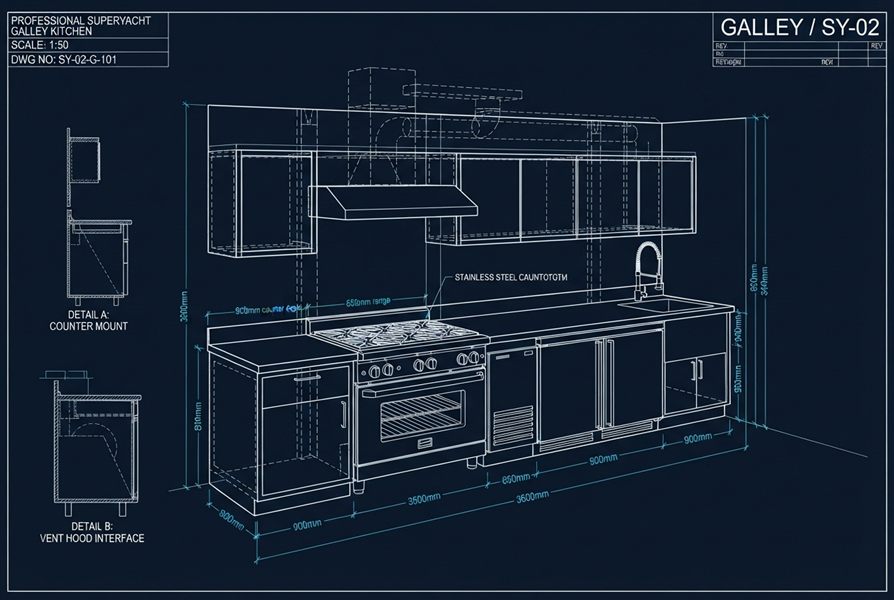
The difference between 316L and 304 stainless steel is a small chemistry change with enormous consequences in marine environments.
Read guide →Europe
Asia Pacific
Americas